

An expedition on the Canol Heritage Trail
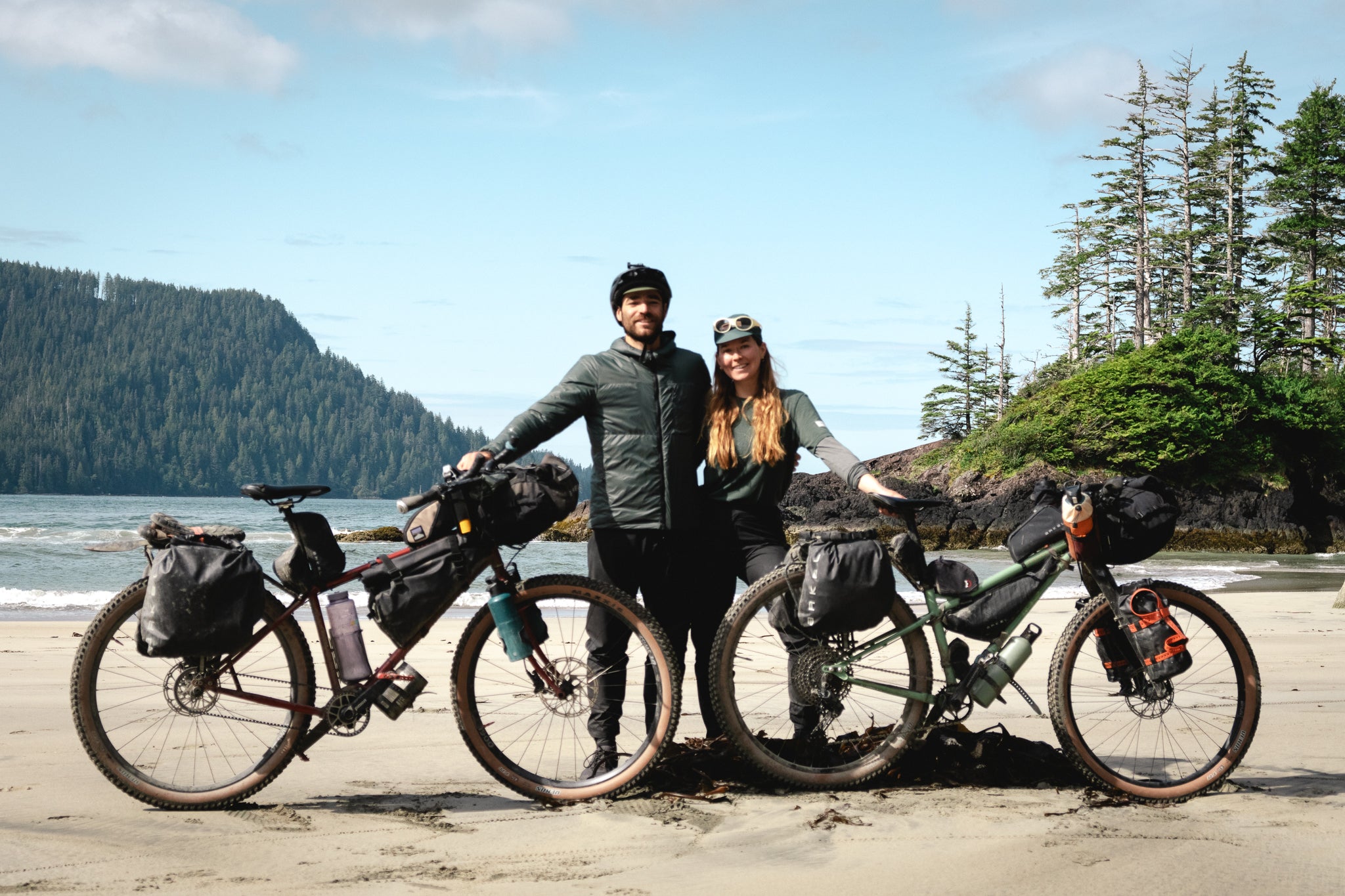
During the summer of 2025, our ambassador Louise Philipovitch and her partner Justin Roy-Brousseau set off on a three-month journey. Their ultimate goal: an expedition along the Canol Heritage Trail, an abandoned route dating back to the Second World War. Here’s a look back at their experience.
Words and photos: @louise_philipovitch

Can you give us some context on what the Canol Heritage Trail actually is?
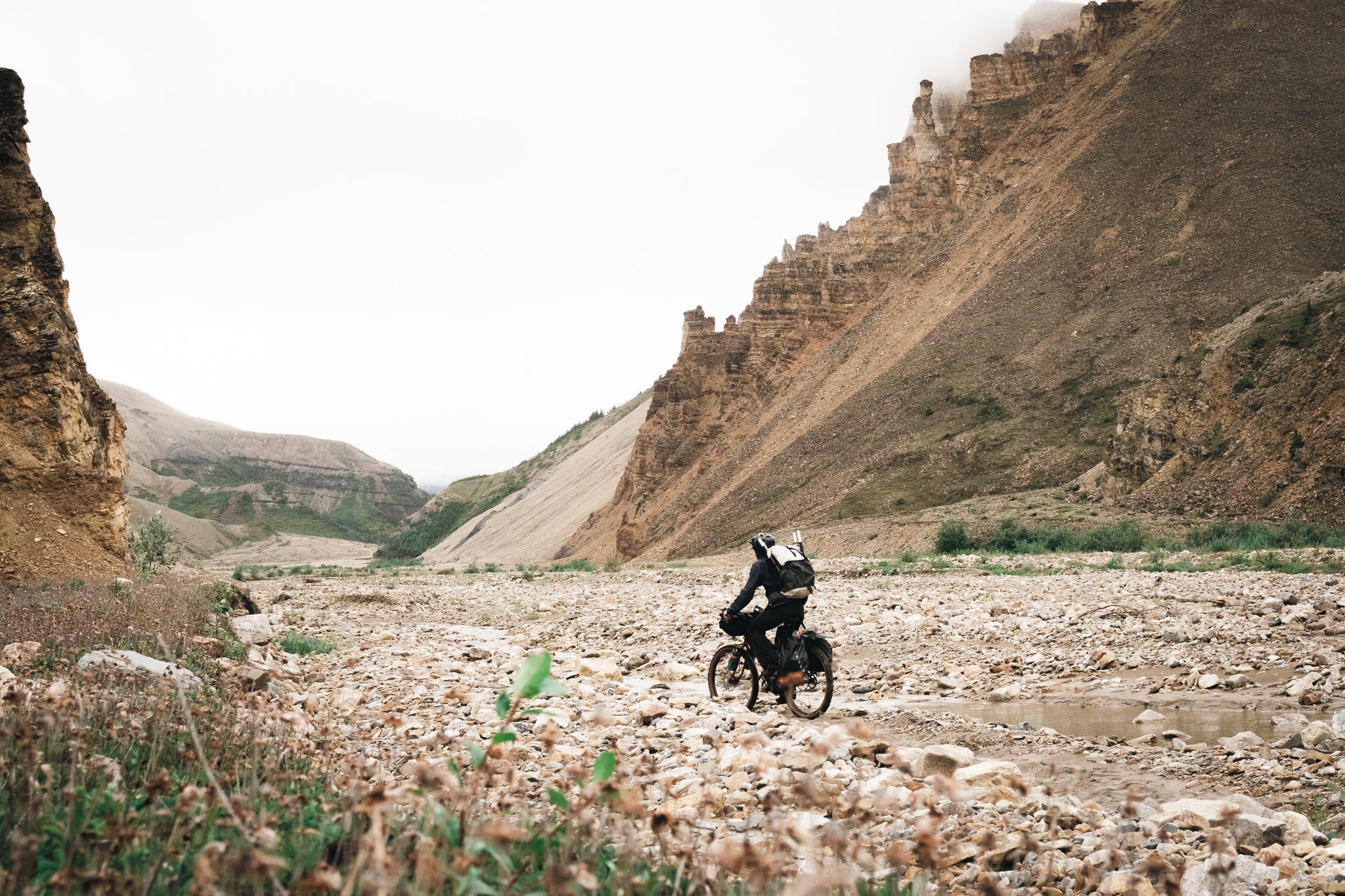
It’s completely normal if the name doesn’t ring a bell, as relatively few people have heard of it. The trail is located in the Northwest Territories and crosses the Mackenzie Mountains. It’s actually a former service road that was part of the Canol Project.
Originally, the Canol Project was a massive construction effort launched during the Second World War. After the bombing of Pearl Harbor, the United States feared for its oil supply, which was vulnerable to Japanese attacks. They envisioned a monumental pipeline linking Norman Wells, a remote community with significant oil reserves, to Whitehorse, cutting through the Mackenzie mountain range. “Canol” stands for Canada Oil.
Thousands of workers were mobilized to build this pipeline in extreme conditions. But once the war ended, the project quickly became obsolete. The pipeline was used for only about a year before being abandoned, deemed too expensive to maintain.
The U.S. Army left almost overnight, abandoning vehicles, buildings, barrels of oil, pumping stations, and even everyday objects. Today, the Canol stands as an open-air museum.


What condition is the route in today?
After decades of abandonment, the route is in very poor condition, as you may imagine. The region’s climate and geography have taken a serious toll on many sections. Between spring floods, landslides, and vast stretches of muskeg, some portions have completely disappeared.
One of the biggest challenges is the absence of bridges: all of them have been washed away over time. Crossing the main rivers requires inflatable boats such as packrafts, adding an extra layer of technical and logistical complexity to the expedition.


Why go there? What drew you to this route?
Honestly, absolutely everything about the Canol drew me in! The extreme isolation of the route, the need to be fully self-sufficient for more than ten days, and of course its historical dimension. Riding the Canol means traveling through a landscape shaped by many layers of history, far beyond the footprint left by the U.S. Army.
Long before the project, this passage was traditionally used by the Sahtu Dene to hunt and to connect communities on either side of the Mackenzie Mountains. It’s a place deeply rooted in human history, both Indigenous and more recent.
So it was both the promise of a demanding adventure and the historical and human significance of the route that made us want to take on this expedition together.


You were away for three months this summer, so your trip involved more than just riding the Canol Trail. Can you tell us more about the overall journey?
My partner and I didn’t want to travel all the way across Canada for just two or three weeks. The Canol was our end goal, but we really wanted to take the time to explore the remote regions of Western and Northern Canada.
We designed a three-month route, gradually moving through increasingly isolated areas, from British Columbia to the Northwest Territories, via the Yukon. We crossed Vancouver Island, the Chilcotin Mountains, the Shulaps, and then followed the Dempster Highway north to Inuvik.
The idea was to prepare ourselves progressively, both physically and mentally, for what awaited us on the Canol, which was the final and most committing segment of the trip.


How did you prepare in terms of gear?
Our priority was to rely on strong, dependable equipment. In such a remote environment, a mechanical issue can quickly become critical. We needed gear we could trust completely, to minimize the risk of major failures.
As for bikes, we rode a Taïga and a Boréal Pinion. We were looking for steel frames that were comfortable and durable, capable of carrying heavy loads and handling rough terrain. Wide tires were also essential to tackle the wide range of surfaces we encountered.
For our bags, we chose Arkel products. We wanted something 100% reliable, with enough space for all the food we had to carry, while remaining as light as possible. The Dry-Lite bags turned out to be the perfect fit for us.
Having two Canadian brands with us for our expedition in Canada made it even more special.
How did it go?
Like any adventure of this scale, it came with its share of unexpected challenges. We had several close encounters with bears, including grizzlies. River crossings proved particularly dangerous, as heavy rainfall had raised water levels, making currents strong and unpredictable.
At one point, we ran low on food and had to ration. Hunger quickly became difficult to manage, both physically and mentally. Moving forward with so little energy required a tremendous effort.
There were also more unexpected incidents, like the day I stepped into a wasp nest. I was stung multiple times in the face, to the point where I could barely open my left eye for a few days.
Despite all this, the expedition went remarkably well, especially considering the conditions. We were particularly lucky: no crashes, no mechanical issues. On a trip of this length and in such a demanding environment, that’s quite exceptional.
We’re especially grateful to have completed the Canol Heritage Trail, which is far from guaranteed. Many people attempt it without finishing, forced to abandon or be evacuated by helicopter due to injuries, mechanical failures, or harsh conditions.


How do you feel after a journey like this?
With a deep sense of accomplishment. We set off with a lot of humility, not knowing whether we would be able to make it to the end.
Completing the route was about much more than a sporting goal. It was a way of confronting the unknown, learning to adapt, and ultimately discovering what we were truly capable of.